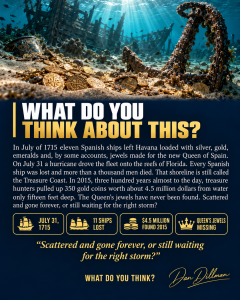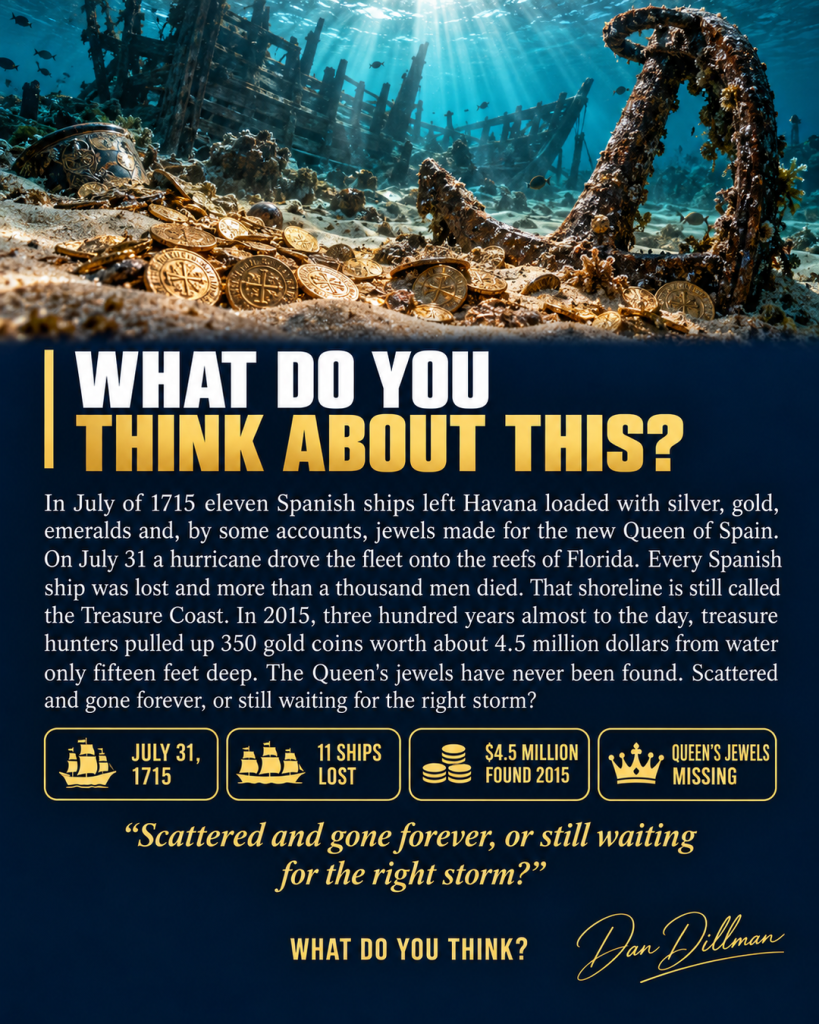
Eleven ships heavy with the wealth of an empire sailed out of Havana in July of 1715. They were carrying silver from Mexico, gold from Colombia, emeralds, Chinese porcelain, and by some accounts a set of jewels made for the new Queen of Spain, who had refused to share a bed with the king until her treasure arrived.
Seven days later, in the dark hours of July 31, a hurricane caught the fleet off the coast of Florida and drove it onto the reefs. Every Spanish ship was lost. More than a thousand men died in the surf. Survivors dragged themselves onto a wild beach with nothing but the clothes they wore.
Spain salvaged what it could. Pirates took a share too. Then the wrecks were forgotten for two hundred and fifty years, until a building contractor named Kip Wagner started finding blackened silver coins on the beach after storms. That stretch of Florida is still called the Treasure Coast, and it still pays. In 2015, three hundred years almost to the day, a crew of treasure hunters pulled up 350 gold coins worth about 4.5 million dollars in water only fifteen feet deep.
As a treasure hunter, that is the part that gets me. Fifteen feet of water. A few hundred feet from the sunbathers.
And the Queen’s jewels have never been found.
Could it be that the richest prize of the entire fleet is still lying under the sand, within sight of the beach.
Scattered and gone forever, or still out there waiting for the right storm?