
On a wooded hill outside Louisville, Kentucky, there is a tunnel five hundred feet long that was built for one purpose, moving the dead where the living could not see them.
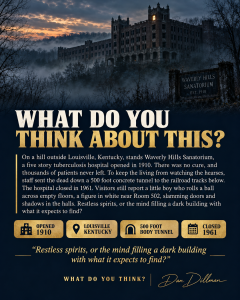
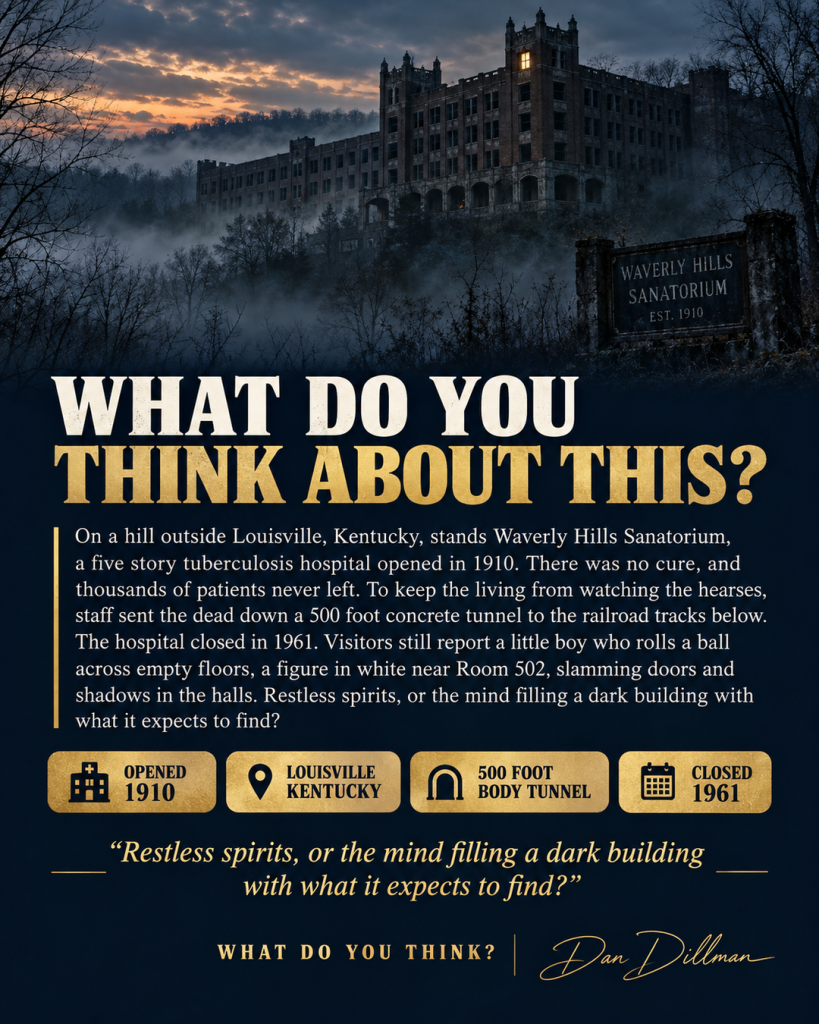
Waverly Hills Sanatorium opened in 1910 and grew into a massive five story brick hospital by 1926, built to fight the white plague, tuberculosis. There was no cure. Patients were wheeled onto open air porches in the dead of winter, and surgeons tried collapsing lungs and removing ribs in the hope that something would work. Thousands never left. The staff feared that a steady parade of hearses would break the spirit of those still fighting, so the bodies went down the chute, a long concrete tunnel to the railroad tracks at the bottom of the hill.
The hospital closed in 1961. The stories never did. Visitors report a little boy who rolls a ball back to them across empty floors. They report a figure in white near Room 502, where a nurse is said to have died in 1928. They report doors slamming on the fourth floor, shadow shapes crossing the hallways, and the smell of fresh bread from a kitchen that has been cold for sixty years.
I have walked through places like this. Some buildings are just old. Others feel like they are holding their breath.
Could it be that a place soaked in that much suffering, that much hope and that much fear, records it somehow, and plays it back for those who are listening.
Restless spirits, or the mind filling a dark building with what it expects to find?