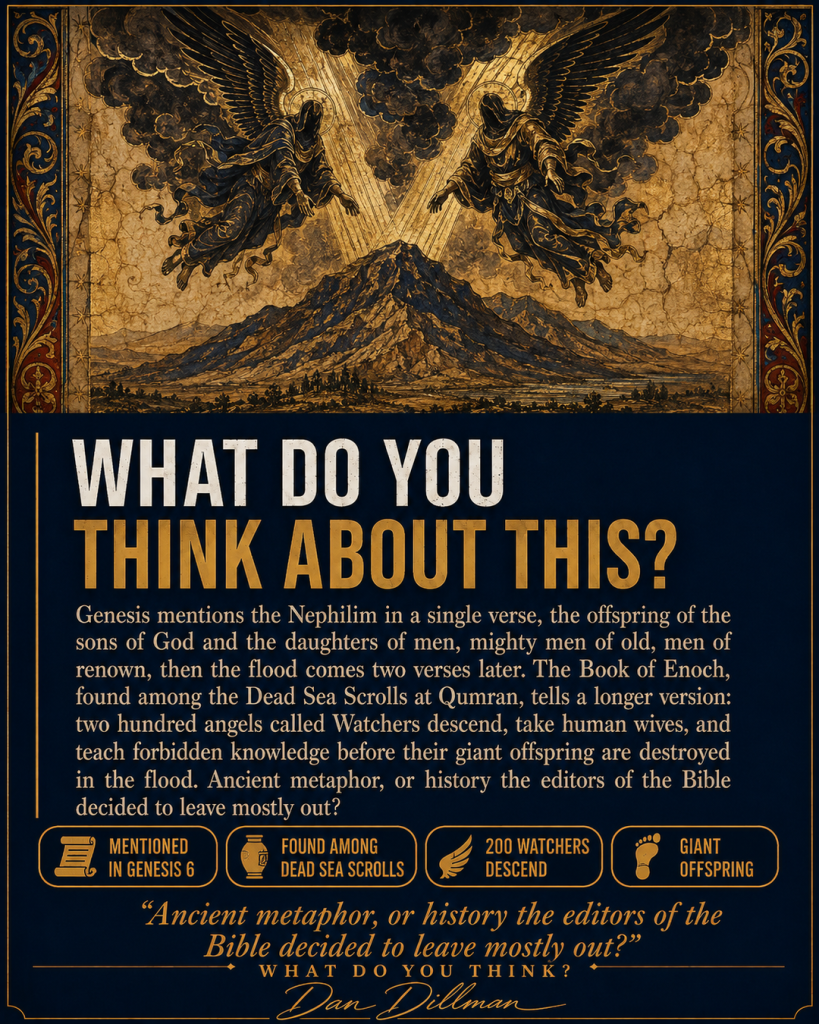
Genesis mentions them in a single verse, almost in passing, as if the writer assumed everyone already knew who they were. The Nephilim, it says, were on the earth in those days, the offspring of the sons of God and the daughters of men, and they were the mighty men of old, men of renown. Then the flood comes two verses later and the text moves on, leaving the Nephilim as one of the shortest and strangest passages in the entire Hebrew Bible.
The Book of Enoch, a text that did not make it into most modern Bibles but turned up among the Dead Sea Scrolls at Qumran, fills in a much longer version. In it, two hundred angels called Watchers descend to a mountain, take human wives, and teach humanity forbidden knowledge, metalworking, cosmetics, warfare, astrology, before their offspring grow into giants that the flood is sent partly to destroy. Ancient historians outside the Bible, including the Jewish historian Josephus, treated the giant offspring of angels as an accepted part of the old world’s history rather than a myth.
Archaeologists have found unusually large skeletal remains at scattered digs over the last two centuries, though none have held up to modern forensic review as genuinely oversized humans.
The truth may be far stranger than we have been told, if the flood story we all know is really just the ending of a much older story that got trimmed down to one verse.
Ancient metaphor, or history the editors of the Bible decided to leave mostly out?