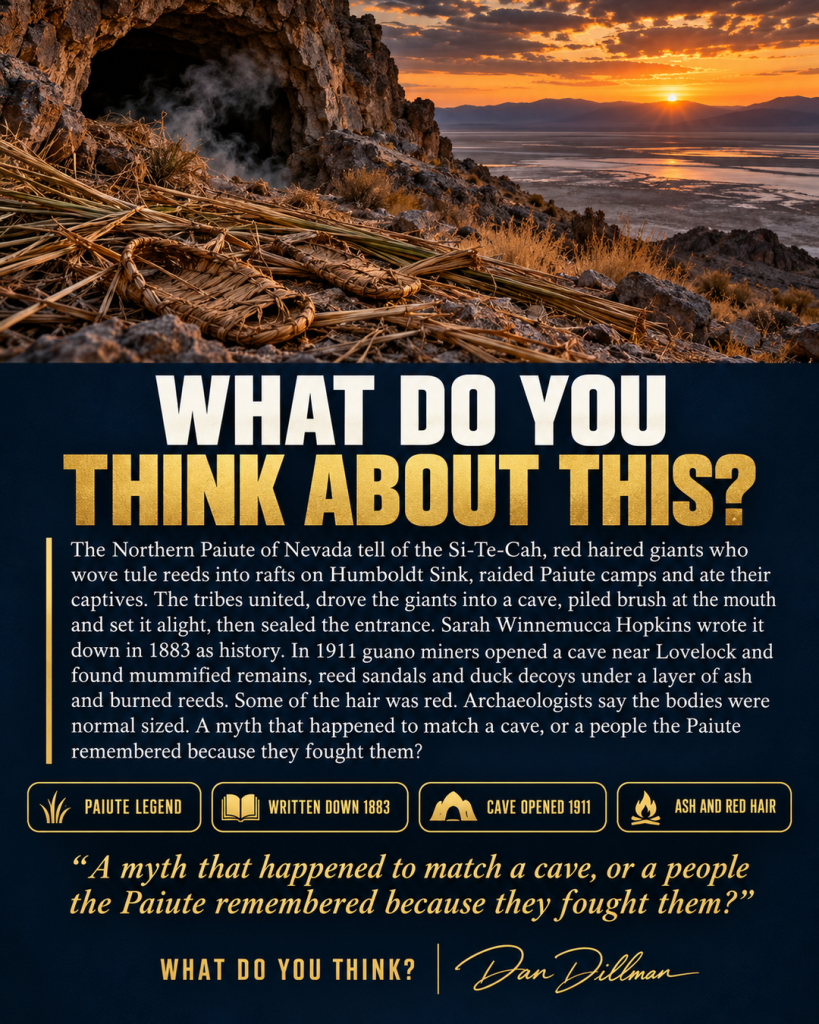
The Northern Paiute of Nevada have a story they have told since long before any white man wrote it down. It is about a tribe of red haired giants called the Si-Te-Cah, which means tule eaters, after the reeds they wove into rafts on the marsh that is now Humboldt Sink.
The Si-Te-Cah were savage. They raided Paiute camps and, the story says, ate the people they took. At last the tribes of the region banded together and drove the giants back until the survivors took shelter in a cave. The Paiute piled brush at the mouth and set it on fire. The ones who ran out were shot with arrows. The ones who stayed in the cave died in the smoke. Then the Paiute sealed the entrance, and left it.
The story was written down in 1883 by Sarah Winnemucca Hopkins, the daughter of a Paiute chief and the first Native American woman to publish a book in English. She told it as history, not folklore.
In 1911 guano miners opened a cave above the dry bed of Humboldt Lake near Lovelock, Nevada. Under the bat droppings they found mummified human remains, sandals, baskets, duck decoys, and a layer of ash and burned reeds. Some of the hair on the mummies was red. Some of the sandals, by the miners’ account, were enormous.
Archaeologists say the hair turned red from centuries in the cave and the bodies were normal in size. The largest finds vanished long ago into private hands. Which leaves the obvious question. Were the Paiute simply telling the truth.
The truth may be far stranger than we have been told.
A myth that happened to match a cave, or a people the Paiute remembered because they fought them?